Not so long ago, if you wanted to watch an anime series or a show based on a video game, you had two options. Option one: haunt a very specific corner of the internet at odd hours and hope the subtitles were accurate. Option two: import physical media at prices that required a small personal loan. Either way, you were doing it alone, in the dark, without anyone to talk to about it on Monday morning.
That world is gone. Streaming did not just make geek content more accessible — it completely rewrote the rules of what that content could be, who it could reach, and how seriously the industry was willing to take it. We are living through the golden age of geek television right now, and it is worth taking a moment to appreciate exactly how we got here.
The Show That Changed the Conversation: Arcane
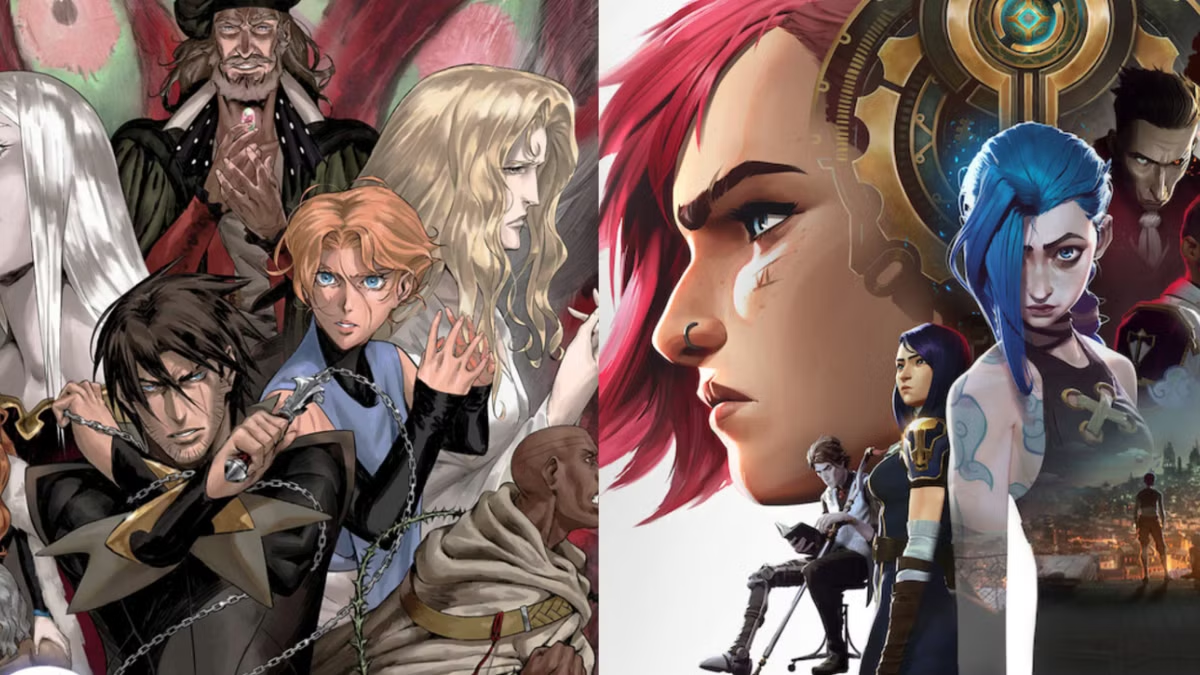
If there is a single moment that announced streaming’s serious commitment to geek culture, it is the arrival of Arcane on Netflix. Based on Riot Games’ League of Legends universe and produced by the French animation studio Fortiche, Arcane’s first season launched in November 2021 to a reception that surprised even its most optimistic supporters. Both seasons of Arcane earned a perfect 100% critics’ score on Rotten Tomatoes — a feat that is almost statistically improbable for any television series, let alone one rooted in a video game IP.
What made Arcane matter beyond its scores was what it demonstrated to an industry still full of skeptics. A show built around a gaming property could have prestige-level animation, emotionally devastating writing, and a soundtrack that people genuinely listened to outside of the show. It did not need to dumb itself down for a mainstream audience. It could simply be excellent, and the audience would find it.
Upon the release of each season, the show immediately rocketed up to number one on Netflix’s charts within its first week. Spin-offs are in development. The franchise has expanded into novels. Arcane did not just succeed — it established a template.
The Dandadan Effect: When a Theme Song Breaks the Internet
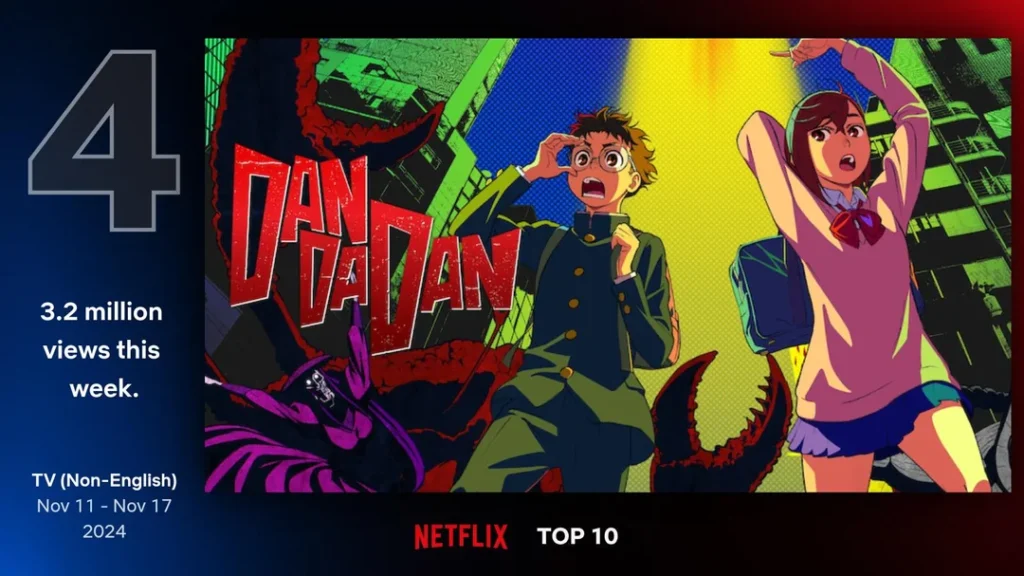
If Arcane proved that prestige geek television was possible, Dandadan proved that it could go viral in ways nobody predicted. Dandadan’s season one opening theme, “Otonoke” by Creepy Nuts, went viral before the anime had even premiered. The Crunchyroll upload of the opening on YouTube accumulated 74 million views, while the official music video reached 87 million. Short reaction videos flooded TikTok, pulling in audiences who had never watched an anime episode in their lives.
The numbers that followed were extraordinary. Dandadan season two emerged as the clear leader among Netflix anime, pulling in over seventeen million views and cementing its status as the platform’s most-watched anime of 2025. Just three months after the anime premiered, sales of the Dandadan manga more than doubled.
That last point matters enormously. Streaming is not just delivering audiences to shows — it is converting them into readers, buyers, and dedicated fans who then feed back into the broader ecosystem. The pipeline runs in both directions now.
Why Streaming Works for Geek Content Specifically
The Binge Model Rewards Complex Stories
Geek properties — anime, game adaptations, comic-based shows — tend to have one thing in common: they are built for long-form storytelling. World-building takes time. Character arcs take time. Lore takes time. The traditional weekly broadcast model, designed around casual viewers who might miss an episode, was always a poor fit for content that rewards close attention and continuous watching.
Streaming’s binge model, or even its structured act-release model as Arcane used with its three-part season two rollout, is simply better suited to this kind of content. Viewers can move at their own pace, rewatch key scenes, and engage deeply without fear of falling behind.
The Algorithm as Unlikely Hero
Nobody is going to write a love letter to recommendation algorithms anytime soon. But in the context of geek content, they have done something genuinely useful: they have introduced casual viewers to shows they would never have discovered on their own. A person who watches one fantasy drama gets Castlevania in their recommended list. Someone who finishes Dandadan gets pointed toward Jujutsu Kaisen. The algorithm is not curating with taste, but it is connecting dots that broadcast television never bothered to connect.
Global Reach, Day One
Dandadan’s production company noted that while broadcast ratings in Japan were modest, the show took the number one spot in various anime rankings internationally, with Netflix ranking it in top 10 in the world among all non-English TV shows in 2024. That kind of global simultaneous release was impossible before streaming. A show can now become a worldwide cultural event on the same day it premieres, regardless of geography.
What This Means for the Future
The quality bar for geek television is now significantly higher than it was five years ago, and that is not going back down. Streaming platforms have invested too much and reaped too many rewards to reverse course. The post-2020 anime boom has led streaming competitors to vastly expand their anime libraries, either via exclusive releases or sublicenses, and that competition is only pushing production values and creative ambition further upward.
We are also seeing the beginning of a genuinely interesting creative feedback loop. Arcane’s success is generating League of Legends spin-offs. Dandadan’s streaming numbers doubled manga sales. Ghost in the Shell is getting a new adaptation from Science SARU — the studio behind Dandadan — streaming on Amazon Prime. Each success funds and validates the next one.
The era when geek television had to apologize for itself, or squeeze itself into a late-night timeslot and hope for the best, is definitively over. The audience was always there. Streaming just finally bothered to show up for it.